Articles | Updated 19 November 2026
What is a credit note? When to issue one, what it must show, with an example
A credit note is a document a VAT-registered seller gives the buyer when goods or services already sold and invoiced lose value, for example a customer returns damaged goods, a delivery was short, or the price was overcharged. It lets the seller reduce output tax and a VAT-registered buyer reduce input tax by the same amount, without changing the original tax invoice.
When can you issue a credit note
Revenue Code section 82/10 allows a credit note when any one of these 4 events happens
- A price reduction because goods did not meet the agreed specification, were damaged, were short, or were priced higher than correct
- A service price reduction because the service did not meet the specification, was short, or was priced higher than correct
- Goods sold are returned because they were defective, did not match the sample, or did not match the description
- A service contract is terminated for reasons and on conditions set by the Director-General of the Revenue Department
Example: a wholesaler takes back 20 packs
A wholesaler delivers goods to a convenience store with a tax invoice of 10,000 baht plus 700 baht VAT, 10,700 baht in total. The store finds 20 damaged packs worth 1,000 baht and returns them. The wholesaler issues a credit note as in this table.
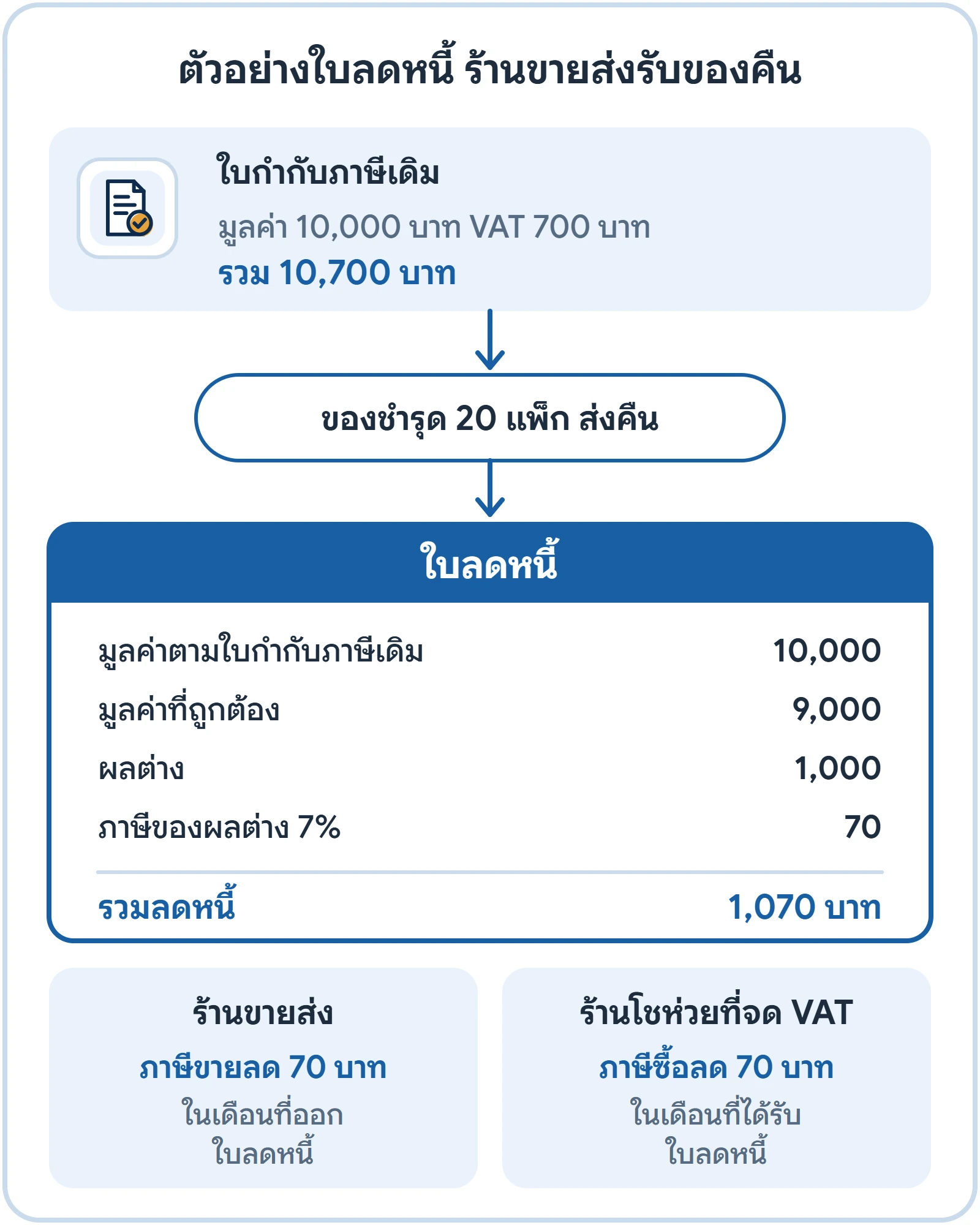
Value on the original tax invoice
THB: 10,000
Correct value
THB: 9,000
Variance
THB: 1,000
VAT on the difference at 7%
THB: 70
Total credit
THB: 1,070
| Item on the credit note | THB |
|---|---|
| Value on the original tax invoice | 10,000 |
| Correct value | 9,000 |
| Variance | 1,000 |
| VAT on the difference at 7% | 70 |
| Total credit | 1,070 |
In which month are output and input tax reduced
The seller deducts the 70 baht from output tax in the tax month the credit note is issued. If the convenience store is VAT registered, it deducts 70 baht from input tax in the month it receives the credit note.
The law says to issue the credit note in the tax month the event happens. For example, goods returned on 25 November should get a credit note within November. If there is a necessary reason you cannot, you may issue it in the following month.
What must a credit note include
Section 86/10 sets at least 7 items and treats a credit note as a type of tax invoice
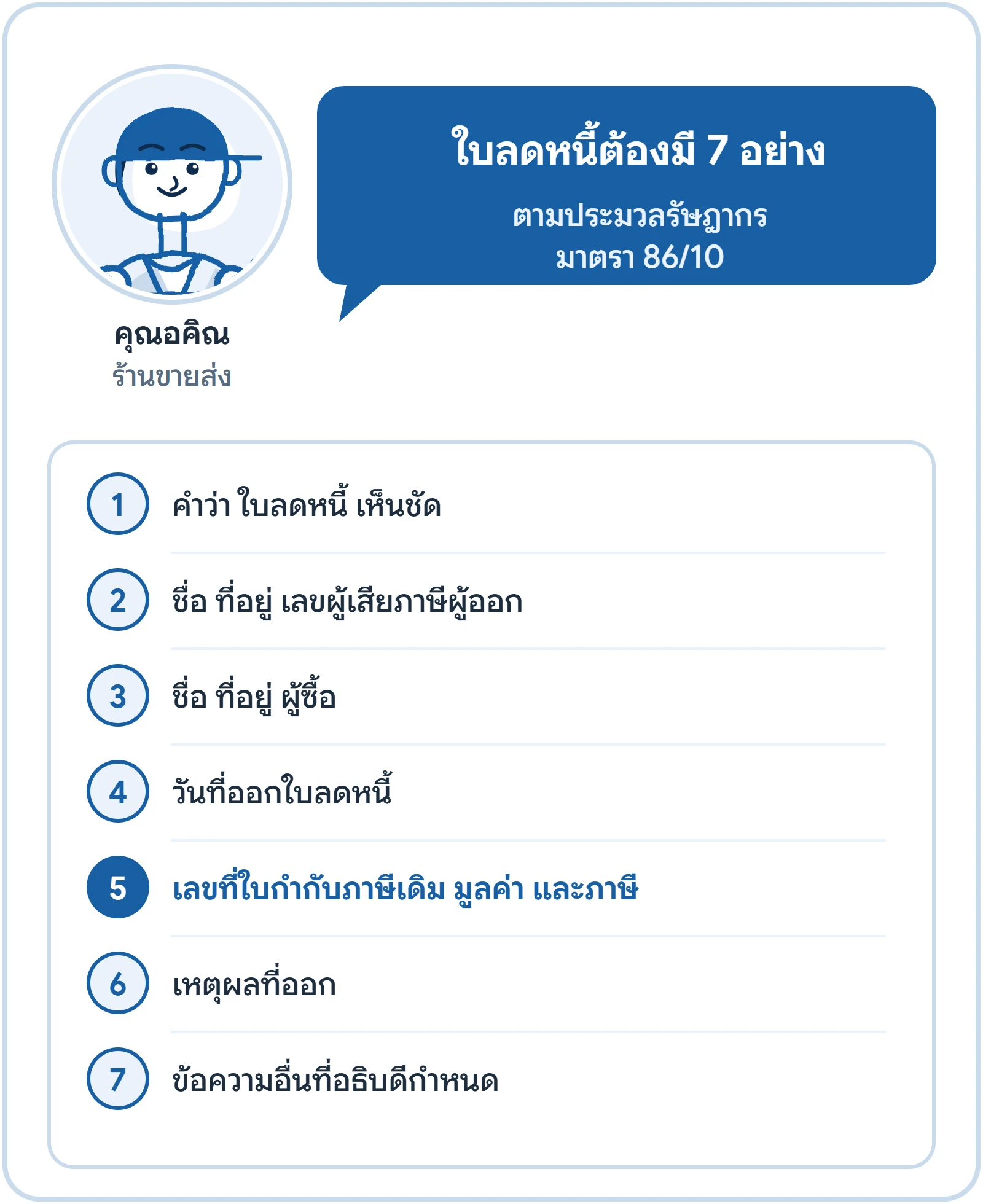
- The words credit note, shown prominently
- Name, address and tax ID of the issuer
- Name and address of the buyer
- Date the credit note is issued
- Original tax invoice number, original value, correct value, difference and VAT on the difference
- A short explanation of why it is issued
- Other details set by the Director-General of the Revenue Department
Can a shop that is not VAT registered issue a credit note
A credit note under section 86/10 is only for VAT-registered businesses, because the law treats it as a tax invoice. A shop not yet registered that takes goods back or gives a discount should make an ordinary return slip or refund slip showing the original bill number and amount, and keep it as evidence of reduced income.
Issuing a credit note in GORINY
Open the original receipt or invoice in Sales, press credit note, then choose the reason: return, discount or service adjustment. For a return, the system copies the lines from the original so you edit quantities to what was actually returned. For a discount, enter the amount before VAT and the system adds VAT at the original rate. A credit note always references the original number and shows as a negative amount in the output tax report for the month it is issued. If the original was an invoice, the customer's balance goes down right away.
Frequently asked questions
- What is the difference between a credit note and a debit note
- A credit note is used when the value sold goes down, for example a return or an overcharge. A debit note is used when the value goes up, for example the price was calculated lower than correct, or more goods than agreed were delivered and the customer kept them.
- Forgot to issue the credit note in the month goods came back. What now
- If there was a necessary reason you could not issue it in time, the law allows issuing it in the next tax month, and output tax is reduced in the month the credit note is issued.
- Can I edit the original tax invoice instead of issuing a credit note
- You should not. A tax invoice already given to the customer is evidence for both sides. If the value goes down for a reason under section 82/10, issue a credit note that references the original.
Sources
Checked against official announcements on 19 November 2026
Related features
Get new articles and ask about store tax on LINE
Add GORINY's LINE OA as a friend. We only send things your store can actually use.
Get articles like this by email
1 to 2 emails a month, unsubscribe anytime
Try it with your own store's data
Sign up yourself right away for a free 14-day trial, then you decide whether to continue. Or try the sample shop first.